Why Fawns Run so Soon

Chris Isidore
| 26-11-2026
 · Animal Team
Most newborn mammals spend their first days helpless, eyes barely open, completely dependent on a parent.
A fawn does not wait around for any of that. Within an hour of birth, it's on its feet, and by the end of day one, it can already outrun a person. That speed isn't a party trick. It's the whole point.

Standing Fast Is the First Job
A fawn's early mobility starts with the muscles. By the time a doe gives birth, the fawn's leg muscles are already well developed, built up during the final weeks of gestation. White-tailed deer fawns typically stand and nurse within 30 to 60 minutes of being born. Compare that to a human baby, which needs roughly a year before it can walk. The fawn has no such luxury, because predators are already nearby.
Why the Clock Is so Short
In the first days of life, a fawn can't outrun a coyote or a bobcat over a long chase. What it can do is burst. That short sprint buys enough distance to reach cover, and the doe often stays close, ready to intervene. Fawns also carry almost no scent in their early weeks, which is why a doe leaves them hidden in tall grass and only returns to nurse a few times a day. Standing and running early means the fawn can flee rather than freeze if it's found.
The Legs Do the Heavy Lifting
Look at a newborn fawn and the proportions tell the story. The legs are long relative to the body, and the hooves are already hard. That build gives a mechanical advantage for pushing off the ground quickly. Deer are also digitigrade, walking on their toes, which adds stride length. A fawn's first runs are clumsy, sure, but the underlying structure is already there. Within a couple of weeks those wobbly sprints turn into real speed, with some fawns hitting close to 30 miles per hour by the time they're a month old.
Not Every Fawn Gets the Same Start
Twins and triplets are common in white-tailed deer, and the second and third fawns in a litter often stand a little slower than the first. A single fawn born to a well-fed doe tends to be stronger at birth. Weather matters too. A fawn dropped in cold, wet conditions takes longer to dry off and get moving, while one born on a mild morning is often up and nursing fast. Same instinct, different starting line.
What the Speed Really Buys
The early running ability isn't about covering ground. It's about the first 50 yards. A fawn that can bolt at the sound of a twig snap survives long enough to grow into an animal that can clear a fence at full sprint. That's the trade nature made: no long childhood, no slow learning curve, just legs that work from hour one.
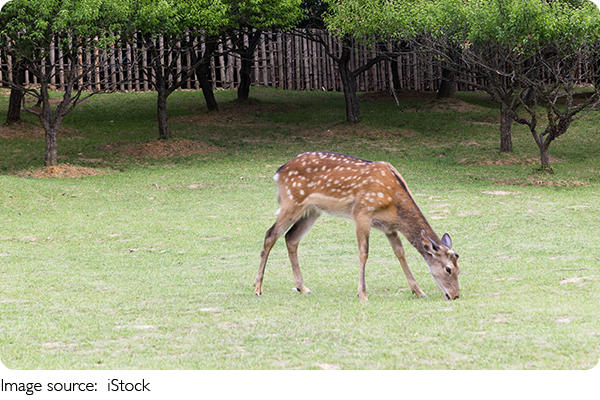
Next time you spot a fawn standing steady in a field, remember it's probably only days old, and it's already built for the run. That's not luck. That's design.